Last.fm: The social network you forgot you had
Redesigning a dormant music platform to surface the community that was already there, hiding in plain sight.
Last.fm's mobile app shows users what they already know — their recent listening history. The platform's social layer is buried on desktop and completely absent on mobile.
Redesigned the mobile experience to surface a community social feed built entirely from data Last.fm already collects — no new data, no streaming, no rebrand.
Validated through two rounds of usability testing with current Last.fm users. High-fidelity prototype rated as immediately plausible and desirable.
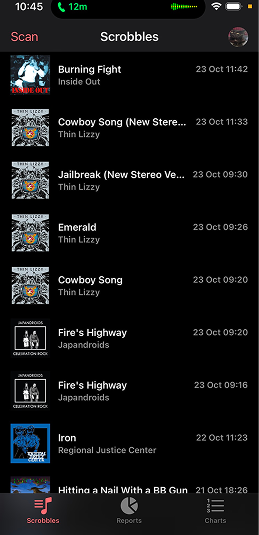 Last.fm as it appears today
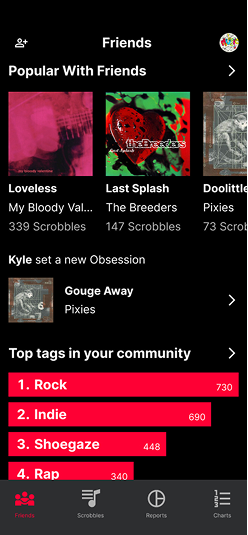 My revised Friends Feed
A social network that forgot it was social
Last.fm was a Designlab UX Academy capstone. The brief: pick a platform with a real, existing problem and redesign it. I chose Last.fm.
Last.fm spent years building something rare: a platform that knew what you listened to, what your friends listened to, and where those overlapped. In 2026, none of that is visible on mobile. The app shows listeners their recent scrobbles (logged plays) and listening data. The social infrastructure exists in the backend, but it's not visible on the app.
The cool thing about this project: I didn't have to invent anything. Every feature is built from data Last.fm already collects and connections users have already made.
Current Last.fm users — habits, frustrations, feature awareness.
Deeper conversations on music habits and social behavior.
Spotify, Airbuds, Music League. All unique, but each missing something different.
Every person surveyed said listening to music is social. But only 3 of 20 knew Last.fm had social features at all. The social layer wasn't just underused — it was invisible to the platform's own users.
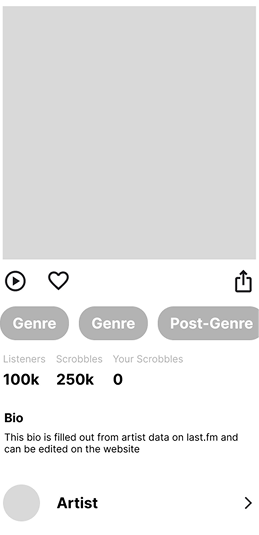
Mid-fidelity Wireframe
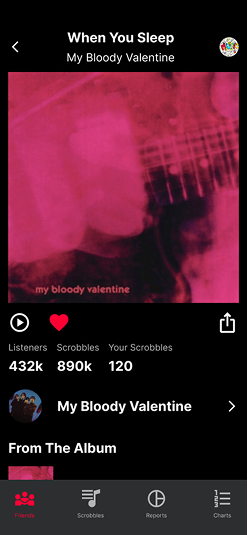
High-fidelity Wireframe
What everyone's missing and what I built instead
| Platform | What It Does | The Gap |
|---|---|---|
| Spotify | Friend activity feed, collaborative playlists. | Shows what friends listen to — not what you have in common. |
| Airbuds | Real-time "what are friends listening to" feed. | Built for college campuses. Doesn't scale geographically. |
| Music League | Social game where friends rank songs around themes. | Game mechanics only. No tie to actual listening behavior. |
None use listening data to facilitate genuine connection — and this isn't a capability gap. Spotify has the data but is primarily a distribution platform; social is a side feature, not the core bet. Airbuds is built around physical proximity, not listening history. Music League is a game that exists independently of what you actually listen to. Each made a deliberate product decision to stop short of using what they know about you to connect you to other people. Last.fm had that data and was doing nothing with it. The redesign replaces the scrobbles home screen with a social feed built entirely from what's already there.
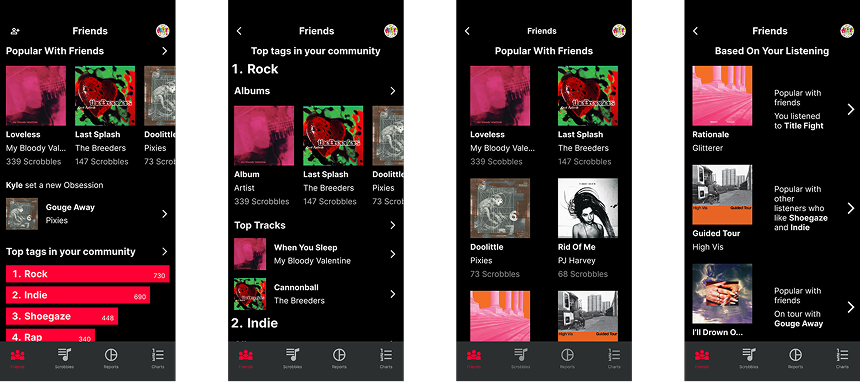
Albums gaining traction in your friend group by tag overlap — real behavior, not an algorithm.
Albums recommended by tag overlap between your history and your friends'. More trusted than streaming recs because they come from real people.
Last.fm already has this — a favorited track on your profile. This redesign surfaces it in the feed like a status update.
Upcoming shows near you filtered by what you and your friends actually listen to — a bridge from the app to real life.
Two rounds. Real Last.fm users both times.
Strongest responses: Obsessions, the concert feed, and taste match suggestions — all of these trusted more than streaming recommendations because they came from visible data and real friends.
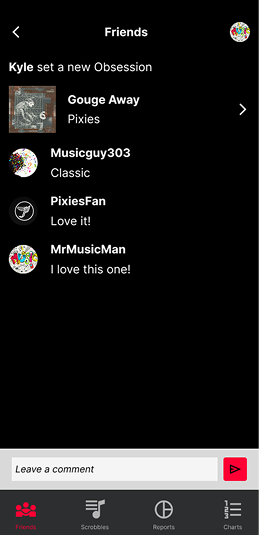
An example of an Obsession post
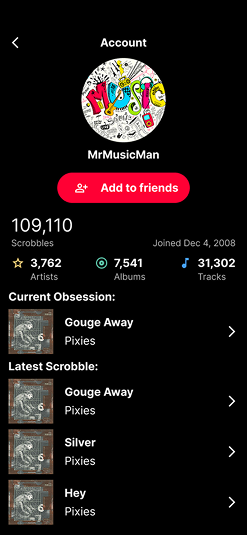
Your profile as it looks to other users
What this proved
The moment that mattered most in testing
Telling testers: this is all built from information you've already given the app. No new data, no new permissions, just a UI that finally surfaces what Last.fm has always known.
In presenting testers with a new product, I didn't have to make a hard sell on suggesting to use this over anything else. It didn't feel like a new product being imposed on them. It felt like something that should have always existed. That's the thing I'm most proud of.